
ROMAN ROOTS
A thousand paces
Britannica says the mile comes from the Roman mille passus, a thousand paces, which measured 5,000 Roman feet.
Compare miles doodlemile
00THE NUMBERS BEHIND IT
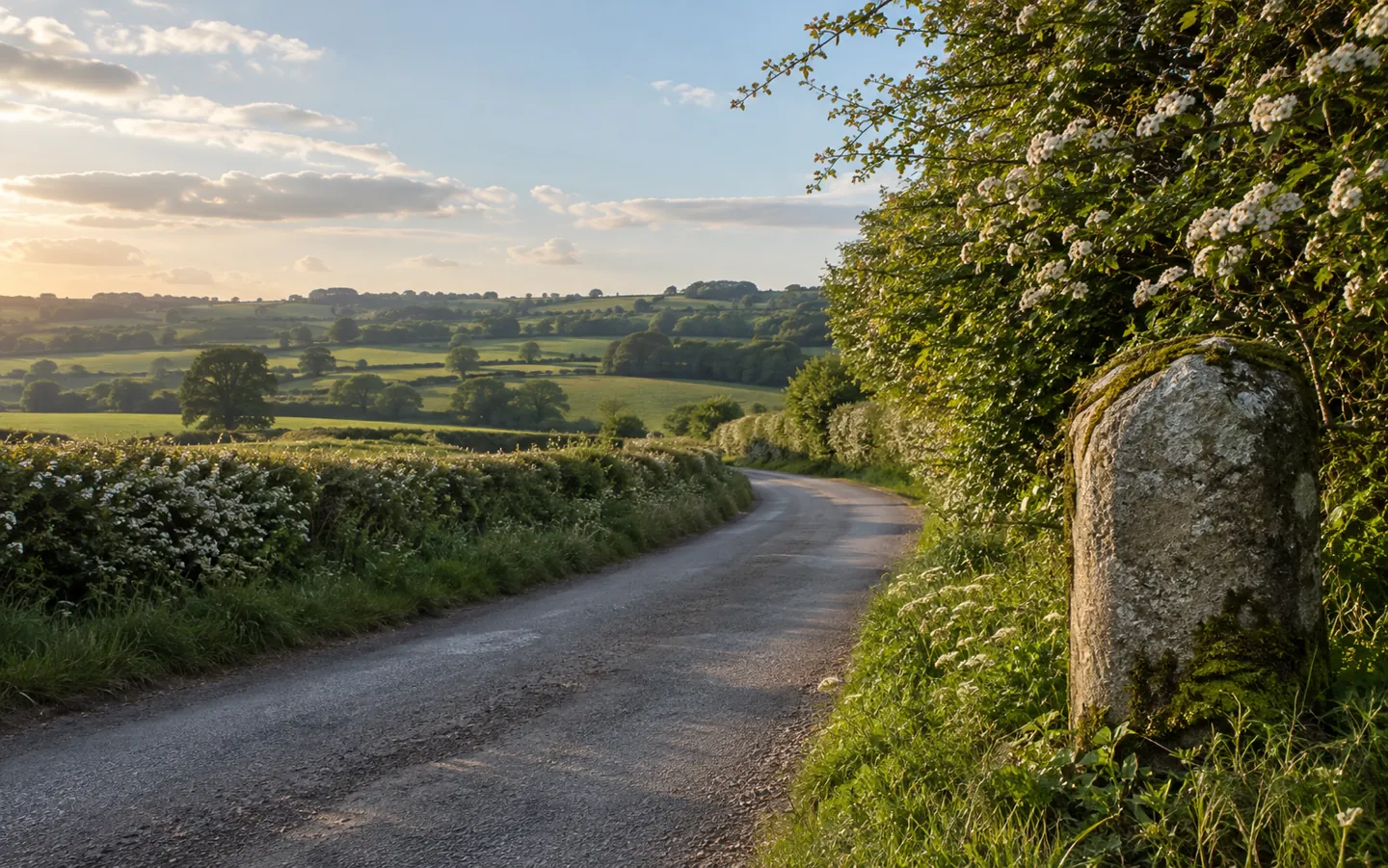
A mile feels like a fixed distance. Its length has a long history.
The mile began as a Roman thousand paces, was stretched by an Elizabethan statute to 5,280 feet, and is pinned down today in UK law as 1,760 yards. At sea, a different mile is used altogether.
Compare miles01Principles
02THE SHORT ANSWER
The mile has changed length more than once.
Today's version dates from an Elizabethan statute.
ROMAN ROOTS
Britannica says the mile comes from the Roman mille passus, a thousand paces, which measured 5,000 Roman feet.
Compare milesFURLONGS
A statute of 1593 confirmed a shorter foot that made the furlong 660 feet. Eight furlongs then made a mile of 5,280 feet.
See the numbersAT SEA
The nautical mile was redefined in 1929 as exactly 1.852 km, about 1.1508 statute miles. A knot is one nautical mile per hour.
Miles at sea03A QUICK MILE CHECK
Pick a mile to see how long it is. The bar shows how it compares with the others, from shortest to longest.
Lengths from Encyclopaedia Britannica's entry on the mile. Historical miles are shown for comparison.
04TWO NUMBERS WORTH KNOWING
One figure for the road,
one for the chart.
5,280 ft
Feet in a statute mile
The 1593 statute added 280 feet to the old 5,000-foot mile by fixing the furlong at 660 feet. UK law now defines the mile as 1,760 yards, and a yard as 0.9144 metre.
STATUTE MILE · BRITANNICA
1.852 km
Length of an international nautical mile
Set exactly at a conference in Monaco in 1929. The United States adopted the international nautical mile in 1954.
NAUTICAL MILE · BRITANNICA
The international foot was fixed at exactly 0.3048 metre in 1959, says the US National Institute of Standards and Technology, which retired the slightly longer US survey foot at the start of 2023.
05MILES IN EVERYDAY LIFE
A few figures from official and reference sources that make a mile easier to picture.
Multiply by about 1.609. A mile is 1,760 yards, and a yard is 0.9144 metre.
Since 1593 a furlong has been 660 feet, and eight of them make a mile.
The NHS says a brisk walk is about 3 miles an hour, so a mile takes roughly 20 minutes.
A knot is one nautical mile per hour, and a nautical mile is exactly 1.852 km.

06MILES AT SEA

The nautical mile was first defined as one minute of arc along a meridian. Because the Earth is flattened at the poles, that distance grows slightly towards them, so countries used different values.
Britannica gives the British Admiralty mile as 6,080 feet and the US nautical mile as 6,080.20 feet. In 1929 a conference in Monaco set the international nautical mile at exactly 1.852 km, about 6,076 feet.
07Questions
5,280. Britannica says a statute of 1593 fixed the furlong at 660 feet, which made the eight-furlong mile 280 feet longer than the old 5,000-foot mile.
1,760. That is how the Weights and Measures Act 1985 defines the mile, with a yard defined as 0.9144 metre.
About 1.609 km, according to Britannica. Working from the legal definitions, 1,760 yards of 0.9144 metre each is 1,609.344 metres.
It was originally based on one minute of arc of a meridian rather than on paces or furlongs. Since 1929 it has been exactly 1.852 km, about 1.1508 statute miles.
The NHS says a brisk walk is about 3 miles an hour, which works out at roughly 20 minutes a mile. A stroll is slower.
08Sources
ABOUT THIS NAME
doodlemile.com is part of the DoodleSale portfolio. It isn't in an auction right now, but you can ask about leasing it.